Archives
- 2026-04
- 2026-03
- 2026-02
- 2026-01
- 2025-12
- 2025-11
- 2025-10
- 2025-03
- 2025-02
- 2025-01
- 2024-12
- 2024-11
- 2024-10
- 2024-09
- 2024-08
- 2024-07
- 2024-06
- 2024-05
- 2024-04
- 2024-03
- 2024-02
- 2024-01
- 2023-12
- 2023-11
- 2023-10
- 2023-09
- 2023-08
- 2023-07
- 2023-06
- 2023-05
- 2023-04
- 2023-03
- 2023-02
- 2023-01
- 2022-12
- 2022-11
- 2022-10
- 2022-09
- 2022-08
- 2022-07
- 2022-06
- 2022-05
- 2022-04
- 2022-03
- 2022-02
- 2022-01
- 2021-12
- 2021-11
- 2021-10
- 2021-09
- 2021-08
- 2021-07
- 2021-06
- 2021-05
- 2021-04
- 2021-03
- 2021-02
- 2021-01
- 2020-12
- 2020-11
- 2020-10
- 2020-09
- 2020-08
- 2020-07
- 2020-06
- 2020-05
- 2020-04
- 2020-03
- 2020-02
- 2020-01
- 2019-12
- 2019-11
- 2019-10
- 2019-09
- 2019-08
- 2019-07
- 2019-06
- 2019-05
- 2019-04
- 2018-07
-
br Genomic and non genomic signaling crosstalk As
2021-07-21
Genomic and non-genomic signaling crosstalk As exemplified in the previous sections, it is evident that the mechanisms of action of estrogen in the various cell targets represent a combination of complex multifactorial processes. Besides the independent genomic and non-genomic pathways described
-
ERK and p MAPK signaling pathways play critical role in
2021-07-21
ERK and p38 MAPK signaling pathways play critical role in genesis and metastasis of melanoma (Tang et al., 2018). >50% of melanoma Cyclic di-GMP (Abildgaard and Guldberg, 2015) show abnormal activity of BRAF-RAS-RAF to activate MEK signal that drives the growth-promoting extracellular signal-regula
-
In human neuroblastoma SH SY Y cells and in
2021-07-21
In human neuroblastoma SH-SY5Y Disuflo Cy5 azide synthesis and in lymphoma Jurkat cells, Yamanaka et al. [56] showed that exogenously added 24(S)-hydroxycholesterol could be efficiently esterified by ACAT1. These results suggest that both ACAT1 and ACAT2 can control the oxysterol levels by directly
-
In addition to vasoconstrictor actions acute
2021-07-21
In addition to vasoconstrictor actions (acute effects), ET-1 exerts potent mitogenic actions on vascular smooth muscle cells and cardiac myocytes (chronic effects), hence causing vascular and cardiac hypertrophy [19,24,25]. These effects are mediated via stimulation of either ETA or ETB receptors, a
-
It is interesting to note
2021-07-20
It is interesting to note that oligomerization of recombinant DDR1 ECD primarily occurred when the protein was incubated with collagen in solution and to a much lesser extent when collagen was pre-immobilized on a surface as reported in our earlier studies (Agarwal et al., 2007). We believe that pre
-
One specific brain region that may be involved in
2021-07-20
One specific KPT-335 region that may be involved in the reduction of anxiety after anti-SVG-30 treatment is the lateral septum which contains a high density of CRF2 receptors [5], [44]. The lateral septum often exhibits increased immediate early gene expression in response to stress and anxiety [14
-
Wu et al explored the anti
2021-07-20
Wu et al. explored the anti-inflammatory mechanisms by which osthole 35 acted on HepG2 cells cultured in a differentiated medium from cultured 3T3-L1 preadipocyte cells. HepG2 cells, a human liver cell line, were treated with various concentrations of osthole 35 in differentiated media from cultured
-
Stable carbon and nitrogen isotope ratios
2021-07-20

Stable carbon and nitrogen isotope ratios in bone collagen and carbon isotope ratios in bone apatite data were obtained by the means of the techniques described in supplementary data (SD1). For collagen, standard indicators have been used to assess its preservation, such as collagen yield, carbon an
-
Dopamine activity in the PFC and striatum may be antagonisti
2021-07-20
Dopamine activity in the PFC and striatum may be antagonistic, meaning that lower levels of dopamine in the striatum tend to correspond to higher levels of dopamine in the PFC and vice versa (Cools and D'Esposito, 2011; Tunbridge et al., 2006). Human PET studies have reported that dopaminergic PFC f
-
Data from immunohistochemical detection of CIC revealed that
2021-07-20
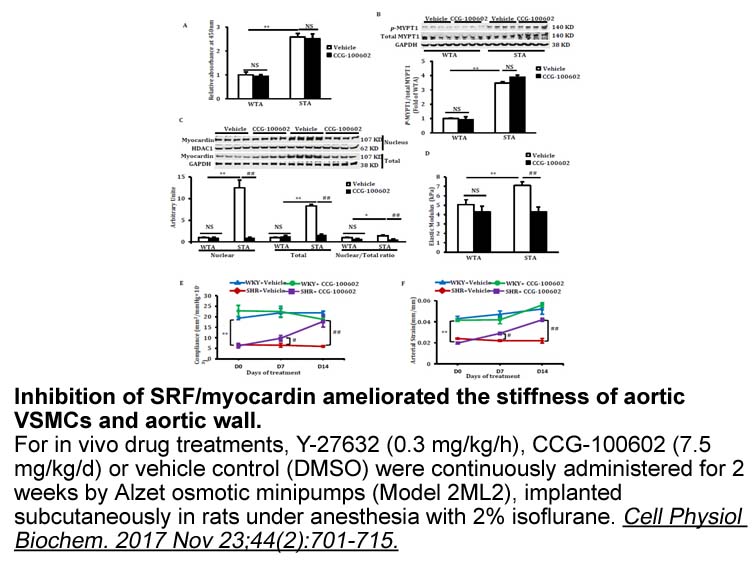
Data from immunohistochemical detection of CIC-3 revealed that the immunostaining of CIC-3 can be present both in hepatocarcinoma and its matched normal controls though; CIC-3 was, on the whole, significantly elevated in hepatocarcinoma relative to its paired normal control. In consideration of the
-
OR-486 A major finding to emerge from this study is a
2021-07-19

A major finding to emerge from this study is a conserved regulatory scheme deployed by both innate and adaptive lymphocytes, which is coordinated by a cohort of TFs. The scheme functionally compartmentalizes effector OR-486 that circulate between blood and peripheral tissues from self-renewing precu
-
These studies suggested that PV
2021-07-19

These studies suggested that PV/PVH might promote bone formation activities and/or inhibit bone resorption activities probably due to its anti-inflammation activity; however, the underlying mechanism remained unknown. Furthermore, it is unclear if PVH shows better activity than that of PV; this is i
-
Many studies reporting on discoveries
2021-07-19
Many studies reporting on discoveries of DUBs in the TGFβ and BMP pathways have relied on RNAi strategies to investigate loss-of-function impact. While RNAi strategies are useful tools, there are limitations ranging from limited knockdowns of targets to potential off-target effects. New and better t
-
The homologous DDRs are composed of an
2021-07-19
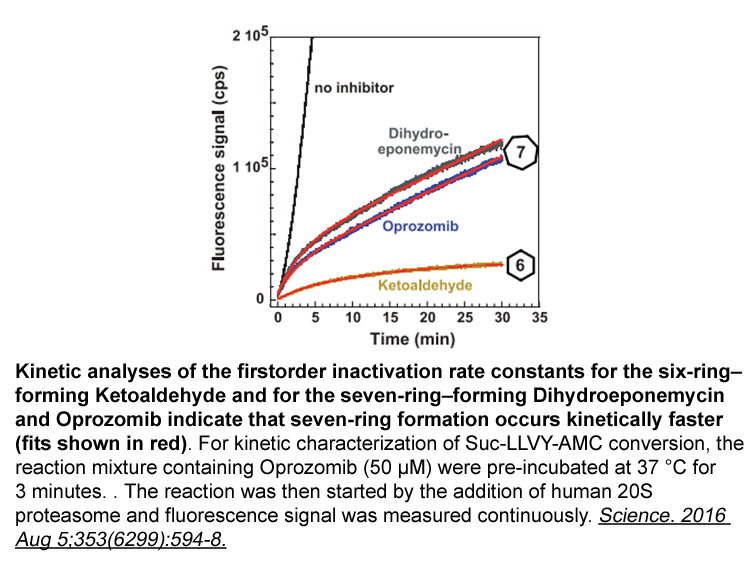
The homologous DDRs are composed of an N-terminal discoidin homology domain, followed by a sequence of ∼220 amino acids unique to the DDRs, a transmembrane domain, a large juxtamembrane domain, and a conserved cytoplasmic tyrosine kinase domain. In a previous study, we demonstrated that DDR activati
-
br Results br Discussion br Experimental Procedures br Ackno
2021-07-19
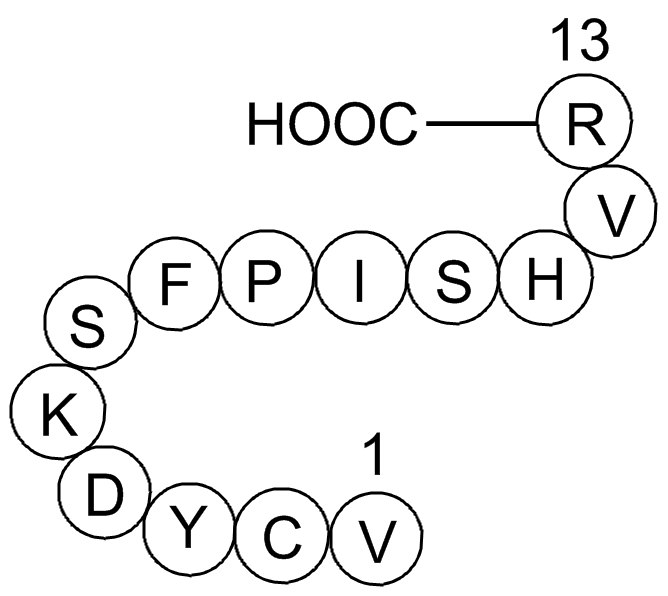
Results Discussion Experimental Procedures Acknowledgments In the preceding paper, we reported 3-amido-4-anilinoquinolines as highly selective inhibitors of CSF-1R kinase, along with our initial efforts to optimize the series. Examples from the 6,7-dimethoxyquinoline series were very p
16285 records 650/1086 page Previous Next First page 上5页 646647648649650 下5页 Last page